TRAINING
Built in data centres
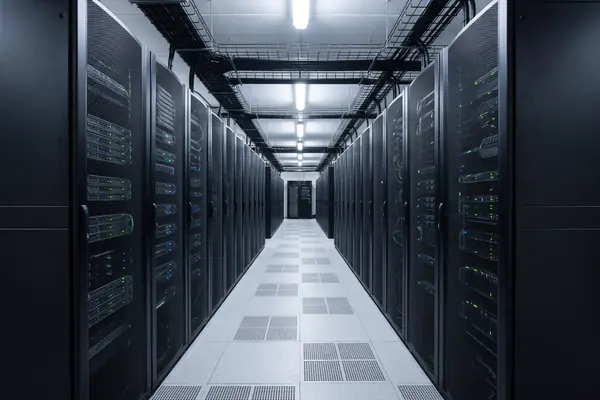
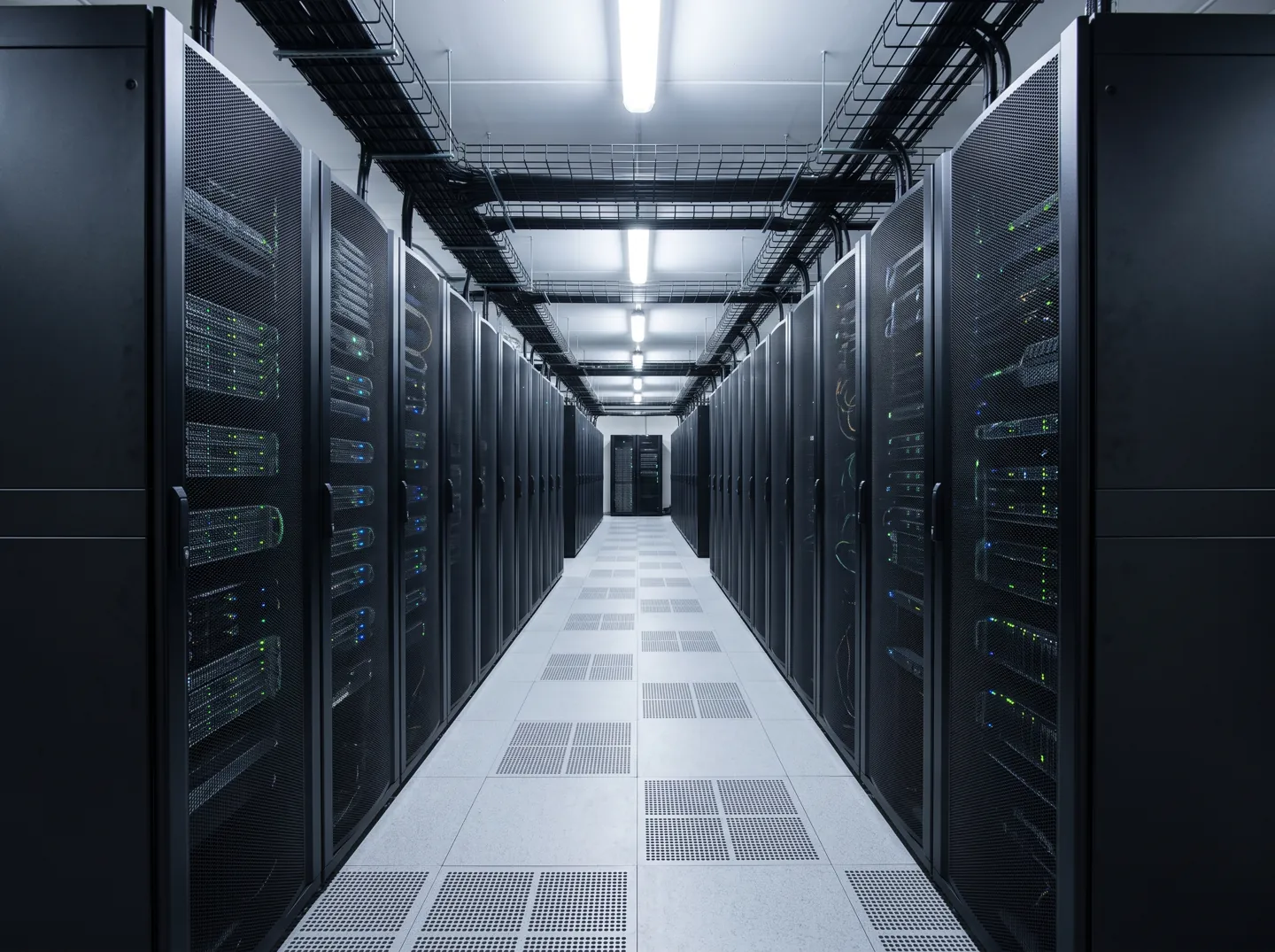
The NCSC notes that large language models need huge compute resources and vast data to train from scratch. The IEA says training and deployment happen mainly in data centres.
See the numbers ailocaltrainer
00TRAINING, TUNING AND USING

Building an AI model and using one are different jobs.
Training a large language model from scratch needs huge compute and vast data. Fine-tuning and running one can be squeezed onto far smaller hardware, and where it runs decides who sees what you type.
Check a job01Principles
02THE SHORT ANSWER
People say an AI is "trained" for all sorts of things.
The size of the job changes a lot.
TRAINING
The NCSC notes that large language models need huge compute resources and vast data to train from scratch. The IEA says training and deployment happen mainly in data centres.
See the numbersFINE-TUNING
Fine-tuning is training on additional data. Researchers showed a 65-billion-parameter model could be fine-tuned on a single 48 GB graphics card.
Compare the jobsUSING
Asking a model questions does not add your words to it, says the NCSC, but a public service's provider can see your queries. A model run on your own machine keeps them there.
Habits to try03A QUICK JOB CHECK
Pick a job to see roughly what it takes and where it usually happens. The bar shows how much computing the job needs.
Based on NCSC guidance on large language models, the IEA Energy and AI report and two peer-reviewed papers on memory-saving methods.
04TWO NUMBERS WORTH KNOWING
One figure for the data centres where models are built,
one for how far fine-tuning has shrunk.
≈ 1.5%
Share of world electricity, 2024
The IEA estimates data centres used around 415 TWh in 2024, about 1.5% of global electricity, and projects around 945 TWh by 2030, with AI the most important driver of growth.
DATA CENTRES · IEA
48 GB
One graphics card, 65 billion parameters
The 2023 QLoRA paper fine-tuned a 65-billion-parameter model on a single 48 GB GPU by holding the frozen model in 4-bit form, while matching full 16-bit fine-tuning performance.
FINE-TUNING · QLORA
The IEA says a typical AI-focused data centre uses as much electricity as 100,000 households, and the largest ones under construction will use 20 times as much.
05FOUR HABITS TO TRY
You do not need to train anything to use AI sensibly. These habits come from the NCSC's advice on large language models.
Asking, pasting context, fine-tuning and training are different. Most everyday use is just asking, which does not retrain the model.
The NCSC advises not to put sensitive information into public LLMs, or anything that would cause problems if it were made public.
For any hosted service, the terms of use and privacy policy decide who can read your queries and how they may be used later.
Models can get things wrong and present them as fact. Treat output as a draft you verify, wherever the model runs.
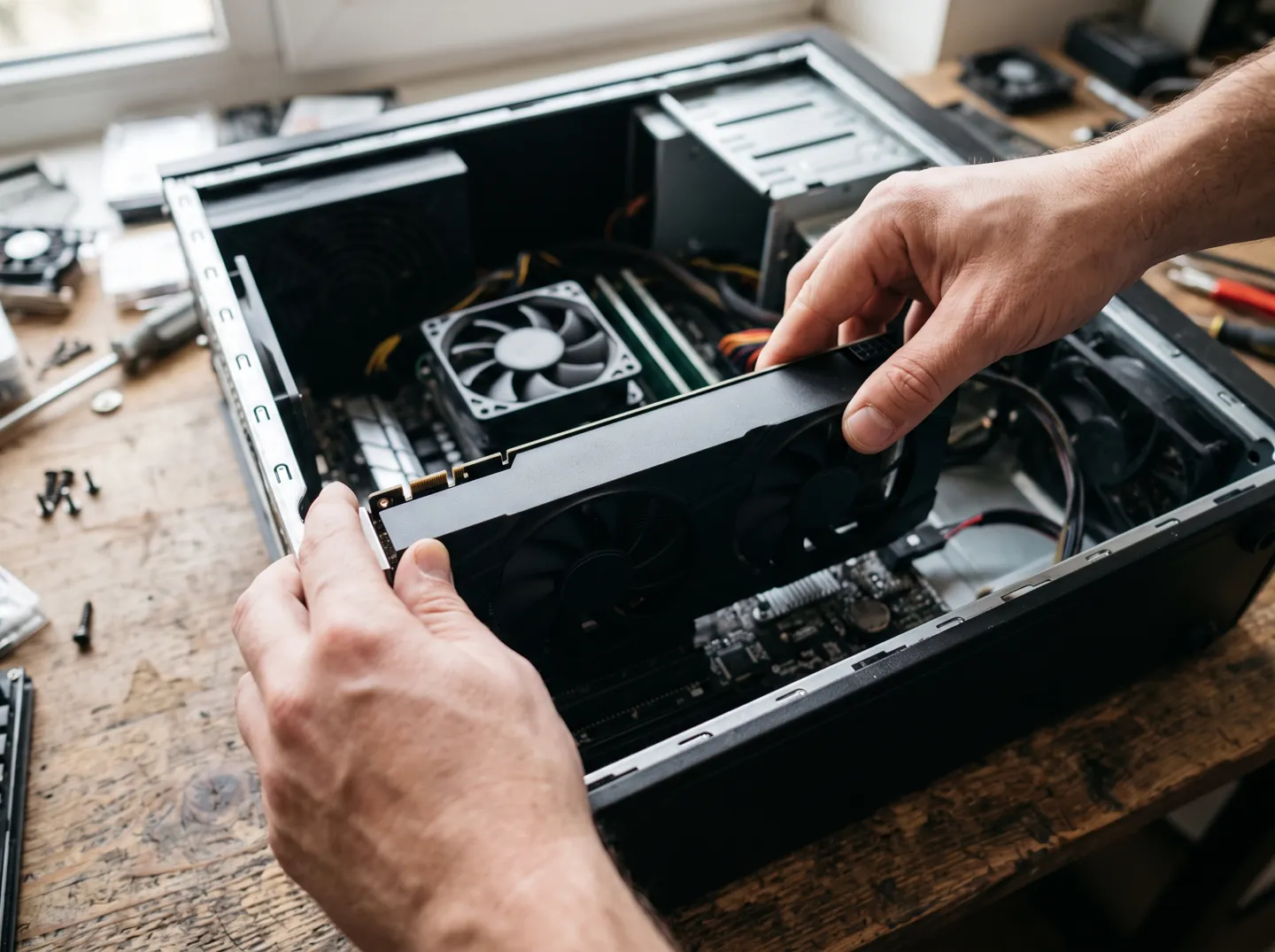
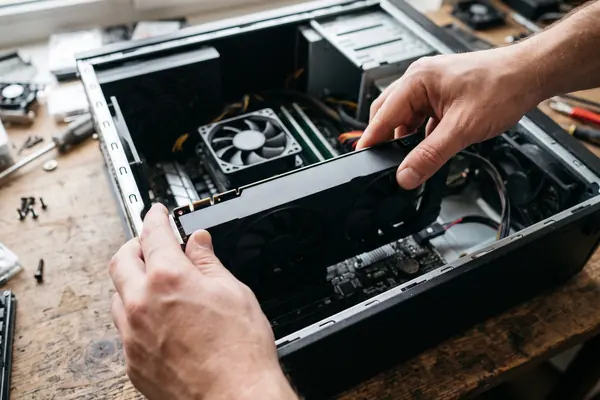
06WHY "LOCAL" MATTERS
The NCSC explains that a large language model is trained and then queried. Its contents are typically static after training, so your question does not become part of the model for other people to find.
The query itself is another matter: on a public service it is visible to the provider, may be stored, and may be used to develop future versions. Running a model on hardware you control keeps the query with you, though the NCSC notes self-hosting can be expensive and needs a security assessment.
07Questions
Not directly, says the NCSC: models are trained and then queried, and a query is not automatically added to the model for others. But the provider can see queries, and they may be used to develop future versions.
The NCSC describes fine-tuning as training an existing model on additional data. It changes the model, unlike adding context to a prompt, which leaves the model as it was.
With memory-saving methods, sometimes. The QLoRA paper fine-tuned a 65-billion-parameter model on a single 48 GB GPU by holding the model in 4-bit form.
Storing a model's numbers with fewer bits. The LLM.int8() paper used 8-bit numbers to halve the memory needed for inference without losing performance on the models it tested.
The IEA estimates around 415 TWh in 2024, about 1.5% of global electricity, rising to around 945 TWh by 2030 in its base case.
08Sources
ABOUT THIS NAME
ailocaltrainer.com is part of the DoodleSale portfolio. It isn't in an auction right now, but you can ask about leasing it.